The Little Things: Finding Life In Nature
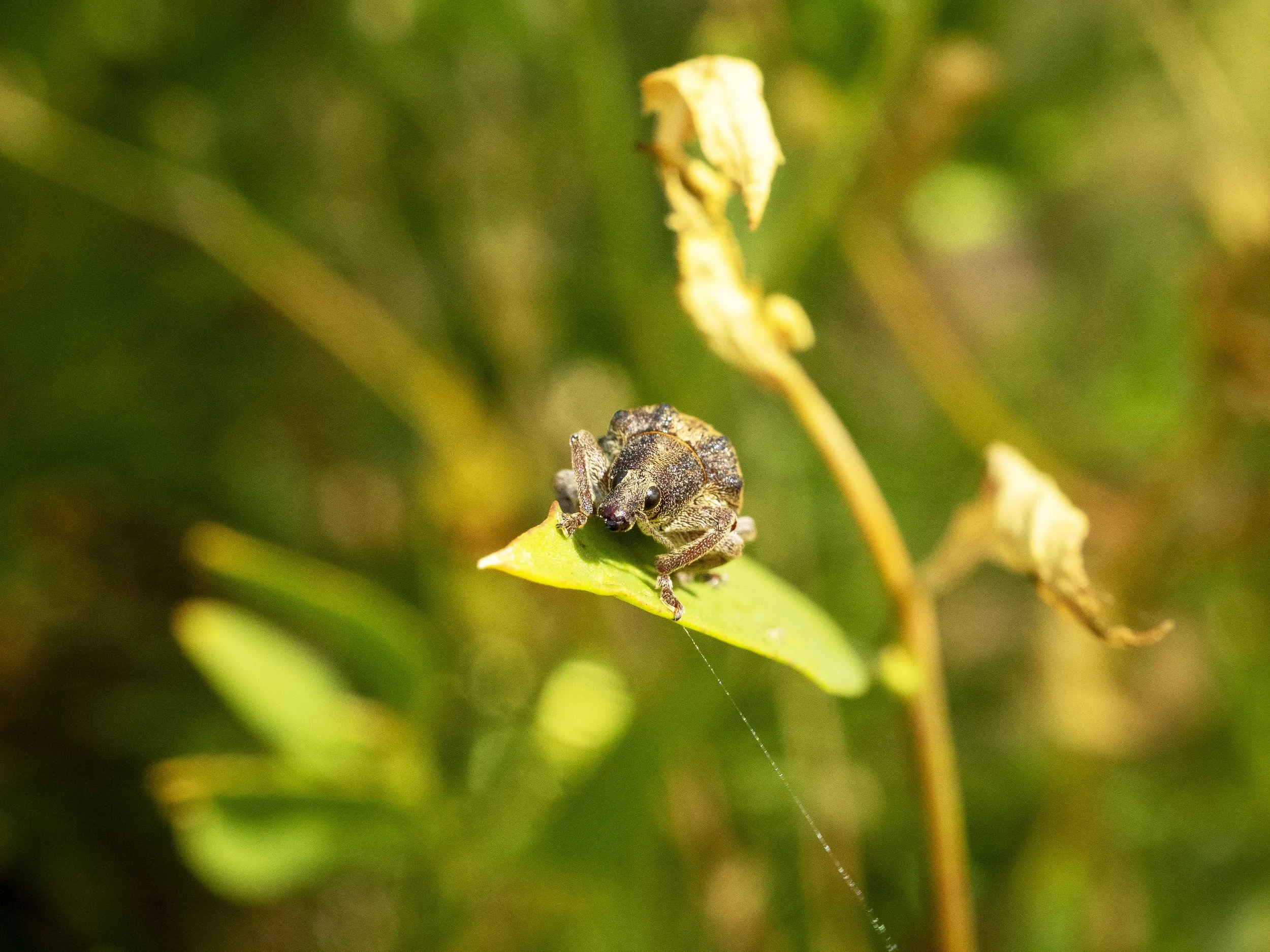
The Little Things: Finding Life in Nature is a fine art macro-photography project that reimagines the traditional practice of insect collecting through an ethical, creative, and reflective lens. Where the conventional entomological collection depends on capture and preservation through death, this series offers an alternative—one that preserves through seeing, honors through attention, and collects through imagery.
Rooted in my background in conservation biology and guided by a lifelong fascination with the natural world, The Little Things is as much a study in mindfulness as it is a visual archive. The project invites the viewer into a dialogue between art and science, curiosity and compassion, documentation and wonder. Each photograph becomes both specimen and portrait—an image that retains the reverence of scientific cataloguing while expressing the sensitivity and intimacy of fine art photography. The project began as a deeply personal response to a moment of ethical conflict during my undergraduate studies in conservation biology. Like many students of entomology, I was required to build a specimen collection—catching, euthanizing, and pinning insects for identification and research. Though I understood the academic necessity of the practice, the act itself created an internal dissonance. I had been drawn to insects not out of a desire to possess or dissect them, but out of wonder at their intricacy, resilience, and quiet presence in the ecosystems that sustain us. That tension—between reverence and requirement—became the conceptual foundation for The Little Things. Rather than rejecting the scientific method, I sought to reinterpret it. Photography became my ethical and creative medium of compromise: a way to document, study, and appreciate these creatures without taking life from them. In this way, the project stands at the intersection of art, science, and ethics. It asks: How can we observe without harming? How can the artistic lens become a tool for both preservation and education?
At its core, The Little Things is a meditation on attention—on what happens when we slow down enough to notice what is so often unseen. Insects, though vital to life on Earth, are among the most overlooked and misunderstood creatures in our shared environment. They pollinate our crops, decompose organic matter, and form the foundation of countless food webs, yet they are frequently dismissed as pests or nuisances. By presenting these creatures as individual subjects rather than anonymous specimens, the project seeks to shift perception—from avoidance to admiration, from indifference to intimacy. The title, The Little Things, carries a dual meaning. It refers both to the literal smallness of the subjects and to the metaphorical “little things” in life that nurture mindfulness and gratitude. In a culture increasingly dominated by technology, constant motion, and digital noise, the act of observing an insect in stillness becomes revolutionary. It is, in a sense, an ecological and psychological restoration—a return to presence, patience, and interconnectedness.
The series consists of fine art macro-photographs captured in natural environments using available light. My chosen tool is the Olympus OM-D E-M1 paired with a 30 mm Zuiko Macro Lens, which allows me to work closely and quietly without disturbing the subject. The compact size of the camera gives me mobility to explore the undergrowth and approach insects from ground level, often in physically uncomfortable yet rewarding positions. I photograph primarily during the golden hours—
sunrise and sunset—when insects are either at rest or just beginning their daily activity. This natural rhythm aligns with the project’s larger themes of harmony and coexistence. The light during these times imbues each image with warmth, softness, and a contemplative tone, transforming what might otherwise appear clinical into something poetic.
Technically, I employ a shallow depth of field and fast shutter speed to isolate the insect within its immediate environment. The result is a controlled focus that draws attention to minute details—the curvature of an antenna, the iridescence of a wing, the minute hairs on a thorax—while letting the background dissolve into abstraction. This visual technique mirrors the process of selective attention: in a world full of distraction, to focus deeply on a single life form becomes an act of reverence. Visually and conceptually, my work stands in conversation with artists such as Robert Mapplethorpe and Imogen Cunningham, whose studies of organic forms transformed botanical subjects into sculptural, sensual meditations on form and light. Their mastery of chiaroscuro—light as revelation— helped me to understand how illumination can transcend documentation and enter the realm of emotion. Equally influential was the work of Levon Biss, whose Microsculpture project for the Oxford University Museum of Natural History demonstrated how extreme macro photography can elevate insects to near-mythic status. Biss’s work, bridging art and science, affirmed my belief that photography could become a contemporary form of entomological cataloging—one that preserves and educates without destruction. From these influences, I developed an approach rooted in naturalism and restraint. Post-processing is intentionally minimal, preserving the integrity of light and color as they exist in the field. I aim for a sense of quiet realism—each image authentic to the moment of encounter.
From an art-theoretical perspective, The Little Things operates within a representational artistic involvement—the imagery reflects real-world subjects in their natural state, presented truthfully and without artificial staging. The emphasis on form, line, color, and texture links the project to formalist traditions, while its underlying emotional and ecological message situates it within eco-art and environmental aesthetics. The series also draws from phenomenological art theory—the study of direct perception and lived experience. Photography here is not merely a tool of observation but a method of embodiment. To photograph an insect at close range is to enter its world, to engage with its rhythm, and to confront one’s own sense of scale and perspective. The viewer, too, is invited into this phenomenological encounter, asked to look closely and reconsider what constitutes beauty, complexity, or significance.
The intended audience for The Little Things encompasses hobbyists, entomologists, and conservationists, as well as anyone seeking reconnection with the natural world. For hobbyists, the project offers inspiration and invitation—a way to engage with nature through a lens of curiosity and creativity. Macro photography becomes a meditative practice, a form of mindfulness that nurtures both artistic skill and ecological awareness. For entomologists, it provides a non-lethal model for study and documentation, aligning with contemporary trends in digital taxonomy and ethical research. The project’s emphasis on natural behavior and living subjects expands traditional modes of scientific collection by adding aesthetic and emotional dimensions. For conservationists, The Little Things serves as a visual advocacy tool. By drawing attention to the beauty and individuality of insects, it challenges the public to reconsider their attitudes toward these essential but imperiled species. In an age of global insect decline—a crisis that threatens pollination, biodiversity, and food security—such re-enchantment is urgently needed.
In this way, The Little Things aligns with the ethics of slow photography, a movement emphasizing intention, presence, and ecological awareness. The camera becomes less a device of capture and more
an instrument of communion—a way to meet the natural world halfway. The visual tone of the series is quiet, luminous, and reverent. Warm hues of gold, green, and soft brown dominate, drawn directly from the environments where the subjects live. These colors evoke the cyclical vitality of life—the same palette that sustains plant growth, soil, and sunlight. The repetition of tones across images creates unity and cohesion, while variations in composition allow each insect to retain individuality. Each photograph functions almost as a portrait in miniature, emphasizing expression and presence over scientific classification. There is a subtle anthropomorphism at play—not to humanize the insects, but to invite empathy through recognition. When we look closely at a dragonfly’s compound eyes or the poised stillness of a butterfly at rest, we recognize not ourselves but the shared miracle of being alive.
The Little Things: Finding Life in Nature stands as a bridge between disciplines, emotions, and scales of existence. It is part fieldwork, part meditation, and part love letter to the unseen majority of Earth’s inhabitants. Through the lens, I seek to transform the act of observation into an act of reverence—to prove that we need not take life to study it, nor possess beauty to preserve it. For hobbyists, the project encourages exploration and connection; for entomologists, it proposes an ethical visual taxonomy; and for conservationists, it offers imagery that can inspire advocacy and awareness. But for all viewers, it is a reminder that seeing is a moral act—that attention itself is a form of care. Ultimately, The Little Things asks us to pause in the rush of modern life, to kneel down amid the grass and sunlight, and to rediscover what we once knew instinctively as children: that the world is alive in every corner, and that meaning often resides not in grand gestures, but in the quiet brilliance of the smallest beings among us.